
Healthcare Recruitment Strategies: Proven Ways to Hire Top Talent (2027)
Healthcare recruitment has never been more challenging or more important. As hospitals, healthcare systems, pharmaceutical companies, insurers, and healthcare technology providers continue investing in digital transformation, the competition for qualified talent is intensifying across both clinical and non-clinical roles.
The pressure extends beyond filling vacancies. Healthcare organizations must recruit professionals who possess the right technical expertise, regulatory knowledge, and cultural fit while maintaining compliance with industry standards and delivering an exceptional
Traditional hiring methods are no longer enough. Today’s healthcare employers need recruitment strategies for healthcare that combine employer branding, technology, specialized staffing expertise, and data-driven decision-making to attract top talent in an increasingly competitive market. The most successful recruitment strategies in healthcare focus on building long-term talent pipelines rather than simply filling vacancies.
Whether you’re hiring nurses, physicians, healthcare administrators, cybersecurity specialists, Epic consultants, SAP professionals, or health informatics experts, implementing the right healthcare recruitment strategy can significantly reduce time-to-hire, improve candidate quality, and increase long-term retention.
In this guide, we’ll explore the most effective healthcare recruitment strategies for 2027, examine why recruitment strategies for healthcare organizations are evolving rapidly, and explain how specialized recruitment partners like SPV Consulting help organizations build high-performing healthcare teams.
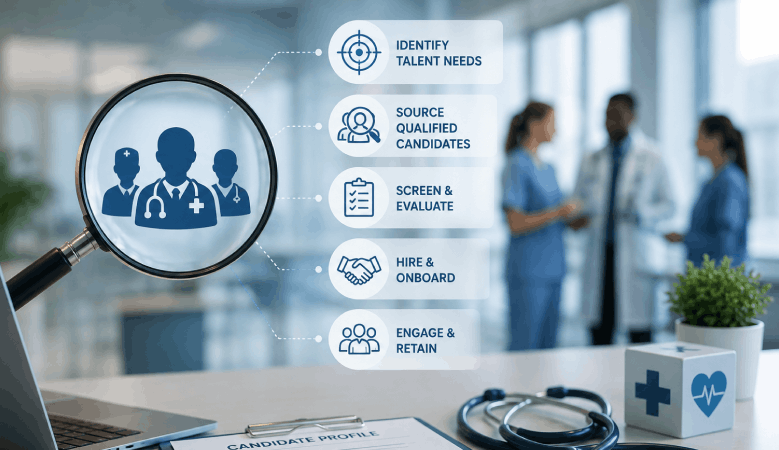
What Is a Healthcare Recruitment Strategy?
A healthcare recruitment strategy is a structured approach that healthcare organizations use to attract, evaluate, hire, and retain qualified professionals across clinical, administrative, and healthcare IT roles.
Unlike general recruitment, healthcare hiring requires balancing multiple priorities simultaneously:
- Meeting strict regulatory and compliance requirements
- Finding professionals with specialized certifications and experience
- Filling critical vacancies quickly without compromising quality
- Competing against other healthcare employers for limited talent
- Supporting long-term workforce retention
Every successful healthcare recruitment strategy should align hiring goals with workforce planning, compliance, patient care objectives, and long-term organizational growth.
For organizations undergoing digital transformation, recruitment strategies must also address growing demand for healthcare IT professionals with expertise in areas such as:
- Electronic Health Records (Epic, Oracle Health/Cerner, Meditech)
- Health Informatics
- Clinical Data Analytics
- Healthcare Cybersecurity
- Cloud Infrastructure
- AI and Machine Learning
- SAP ERP for Healthcare and Pharmaceutical Operations
- HL7 and FHIR Integration
As healthcare technology continues evolving, organizations increasingly need recruitment partners capable of identifying candidates with both technical expertise and healthcare industry knowledge.

Why Healthcare Recruitment Is More Challenging Than Ever in 2027
Healthcare organizations have always faced complex hiring demands, but the recruitment landscape in 2027 is unlike anything the industry has experienced before. Workforce shortages, digital transformation, changing employee expectations, and stricter regulatory requirements have made recruiting qualified healthcare professionals increasingly competitive.
Organizations are no longer competing only with neighboring hospitals or local healthcare providers. They are competing nationally and in many cases globally for highly skilled clinical, technical, and leadership talent.
To build a resilient workforce, healthcare organizations need recruitment strategies for healthcare organizations that are proactive, technology-driven, and aligned with long-term business goals rather than reactive hiring practices.
1.
Growing Workforce Shortages
The demand for healthcare professionals continues to outpace the available talent pool across many specialties. While clinical roles such as nurses, physicians, and allied health professionals remain in high demand, shortages have expanded into healthcare IT, cybersecurity, health informatics, revenue cycle management, and digital health.
As healthcare systems expand services and populations age, organizations must fill positions faster while maintaining high standards for patient care and regulatory compliance. Delayed hiring can lead to increased workloads, employee burnout, reduced patient satisfaction, and operational inefficiencies.
Building a strong talent pipeline has become just as important as filling today’s vacancies.
2.
Digital Transformation Is Changing Hiring Needs
Healthcare organizations are investing heavily in digital transformation to improve patient outcomes, streamline operations, and enhance data-driven decision-making. This shift has dramatically changed the types of professionals organizations need to hire.
Today’s healthcare employers increasingly seek professionals experienced with:
- Electronic Health Records (EHR) platforms such as Epic and Oracle Health
- Healthcare cloud infrastructure
- Clinical data analytics
- Artificial Intelligence and Machine Learning
- Healthcare cybersecurity
- Health Information Exchange (HIE)
- HL7 and FHIR interoperability
- Enterprise ERP platforms such as SAP
These highly specialized professionals are in short supply, making recruitment significantly more competitive than traditional healthcare hiring.
3.
Candidate Expectations Have Evolved
Healthcare professionals now evaluate employers differently than they did just a few years ago.
Competitive compensation remains important, but candidates increasingly prioritize:
- Flexible work arrangements where applicable
- Career development opportunities
- Professional certifications and continuing education
- Positive workplace culture
- Leadership transparency
- Employee well-being
- Work-life balance
- Meaningful organizational missions
Organizations that fail to communicate their employer value proposition often lose top candidates before interviews are even completed.
Healthcare recruitment is now as much about employer branding as it is about sourcing candidates.
4.
Compliance Requirements Continue to Increase
Healthcare recruitment requires far more than verifying technical qualifications.
Organizations must ensure candidates understand and comply with healthcare regulations including:
- HIPAA requirements
- Patient privacy standards
- Security and access controls
- Credential verification
- Background screening
- Licensing requirements
- Industry-specific compliance frameworks
For pharmaceutical companies and regulated healthcare organizations, hiring may also involve professionals familiar with FDA regulations, GxP environments, Computer System Validation (CSV), and enterprise compliance processes.
Recruiters who understand these requirements reduce hiring risk while improving long-term workforce quality.
5.
Competition for Healthcare IT Talent Is Intensifying
Healthcare is becoming one of the fastest-growing technology sectors.
Hospitals, pharmaceutical companies, insurers, digital health startups, and healthcare software vendors are all competing for the same limited pool of experienced professionals.
Some of the most sought-after roles include:
- Epic Consultants
- Healthcare Cybersecurity Engineers
- Health Informatics Specialists
- Clinical Data Analysts
- Healthcare AI Engineers
- SAP Consultants
- Cloud Architects
- Data Engineers
- Integration Specialists
- Healthcare Project Managers
These professionals often receive multiple job offers simultaneously, making recruitment speed and candidate experience critical competitive advantages.
6.
Recruitment Has Become a Strategic Business Function
Modern healthcare recruitment is no longer simply an HR responsibility.
It directly impacts:
- Patient care quality
- Operational efficiency
- Digital transformation initiatives
- Regulatory compliance
- Financial performance
- Employee retention
- Organizational growth
Healthcare organizations that treat recruitment as a strategic investment consistently outperform those relying on reactive hiring methods.
Rather than filling vacancies after they arise, leading organizations continuously build relationships with qualified professionals, maintain talent pipelines, leverage workforce analytics, and partner with specialized recruitment firms to secure talent before competitors do

Why Modern Healthcare Recruitment Strategies Matter
Successful healthcare organizations understand that recruitment is no longer about posting vacancies and waiting for applications.
Effective recruitment strategies in healthcare help organizations respond to workforce shortages, changing candidate expectations, and digital transformation while maintaining high standards of patient care and regulatory compliance.
The most effective healthcare recruitment strategies combine employer branding, data-driven hiring, specialized sourcing, workforce planning, technology, and industry expertise to create a sustainable talent pipeline.
By implementing modern recruitment practices, healthcare organizations can:
- Reduce time-to-hire
- Improve candidate quality
- Increase employee retention
- Lower recruitment costs
- Strengthen employer reputation
- Improve workforce planning
- Support long-term organizational growth
The organizations that consistently attract top healthcare talent aren’t necessarily those offering the highest salaries, they’re the ones delivering a better candidate experience, leveraging technology effectively, and partnering with recruitment specialists who understand the complexities of healthcare hiring.

20 Proven Healthcare Recruitment Strategies to Hire Top Talent in 2027
Healthcare recruitment requires more than filling open positions—it requires building a workforce capable of supporting quality patient care, regulatory compliance, and long-term organizational growth.
The following healthcare recruitment strategies are based on current hiring trends, workforce challenges, and best practices used by leading healthcare organizations worldwide. Whether you’re refining an existing healthcare recruitment strategy or developing new recruitment strategies for healthcare organizations, these recommendations can improve hiring quality and long-term workforce stability.
1.
Build a Strong Healthcare Employer Brand
Building a strong employer brand is one of the most effective recruitment strategies for healthcare because it helps organizations attract candidates before competitors do.
Today’s healthcare professionals evaluate potential employers long before submitting an application. They look for organizations that offer career development, supportive leadership, meaningful work, and a culture that prioritizes both employee well-being and quality patient care. A strong employer brand communicates these values consistently across your careers page, social media, employee testimonials, and recruitment campaigns, helping you attract candidates who align with your mission.
Employer branding is particularly important when hiring specialized talent such as healthcare IT professionals, cybersecurity experts, and health informatics specialists who often have multiple employment options. Organizations that showcase innovation, technology investments, and employee success stories are more likely to attract and retain top talent.
Best practices:
- Showcase employee testimonials and success stories.
- Highlight career growth and training opportunities.
- Promote workplace culture on LinkedIn and social media.
- Share awards, certifications, and community initiatives.
- Communicate your mission and organizational values clearly.
2.
Write Clear and Candidate-Focused Job Descriptions
Your job description is often a candidate’s first impression of your organization. Instead of simply listing responsibilities, explain how the role contributes to patient care or organizational success. Clearly distinguish between required and preferred qualifications, mention career progression opportunities, and describe your workplace culture to encourage qualified professionals to apply.
For technical roles, include relevant platforms and technologies such as Epic, Oracle Health, SAP, HL7, or FHIR. Well-structured job descriptions attract better-qualified applicants while reducing unsuitable applications.
Include:
- Clear responsibilities and expectations.
- Required certifications and licenses.
- Technologies and healthcare systems used.
- Career advancement opportunities.
- Salary range and employee benefits where appropriate.
3.
Use Data-Driven Workforce Planning
Data-driven workforce planning has become one of the most valuable recruitment strategies in healthcare, enabling organizations to anticipate staffing needs instead of reacting to shortages.
Rather than recruiting only when vacancies arise, successful healthcare organizations use workforce analytics to anticipate future hiring needs. By analyzing turnover trends, retirement forecasts, patient demand, and expansion plans, organizations can proactively prepare recruitment strategies and reduce staffing shortages.
Workforce planning also helps healthcare organizations budget more effectively and identify critical roles that require long-term talent pipelines, particularly within healthcare IT and specialized clinical departments.
Track metrics such as:
- Time-to-fill.
- Employee turnover.
- Retirement forecasts.
- Patient demand projections.
- Future expansion plans.
- Skills gap analysis.
4.
Build a Continuous Talent Pipeline
Developing long-term talent pipelines is a core component of successful healthcare recruitment strategies, especially for difficult-to-fill healthcare IT and leadership positions.
The best candidates aren’t always actively looking for new opportunities. Developing a continuous talent pipeline allows healthcare organizations to build relationships with qualified professionals before positions become available. This significantly reduces hiring time and improves candidate quality.
Maintain separate talent pools for nurses, physicians, healthcare executives, and healthcare IT professionals, and engage them regularly through newsletters, networking events, webinars, and personalized communication.
Build pipelines for:
- Nurses.
- Physicians.
- Allied health professionals.
- Healthcare IT specialists.
- SAP consultants.
- Cybersecurity professionals.
- Executive leadership.
5.
Encourage Employee Referral Programs
Current employees understand your workplace culture better than anyone else, making them excellent sources for high-quality referrals. Referral programs often produce candidates who integrate faster, perform better, and remain with the organization longer than those hired through traditional recruitment methods.
Offer incentives for successful referrals and make the referral process simple to encourage greater participation across the organization.
Benefits include:
- Faster hiring.
- Better cultural fit.
- Higher retention.
- Lower recruitment costs.
- Improved employee engagement.
6.
Leverage AI and Recruitment Automation
Technology-enabled healthcare recruitment strategies allow recruiters to automate repetitive tasks while improving hiring efficiency.
Artificial intelligence is helping recruiters spend less time on administrative tasks and more time engaging with candidates. Recruitment platforms can automate resume screening, interview scheduling, candidate communication, and skills matching while improving overall recruitment efficiency.
AI should support—not replace—human decision-making. Final hiring decisions should always involve experienced recruiters who can evaluate interpersonal skills, cultural fit, and clinical or technical expertise.
Automate:
- Resume screening.
- Interview scheduling.
- Candidate communication.
- Skills matching.
- Recruitment reporting.
7.
Strengthen Your Presence on Professional Networks
Healthcare professionals increasingly use professional networking platforms to research employers and explore career opportunities. Maintaining an active presence on LinkedIn and participating in healthcare associations helps organizations build credibility and attract passive candidates.
Publishing thought leadership articles, employee achievements, and healthcare innovation updates positions your organization as an employer of choice.
Focus on:
- LinkedIn.
- HIMSS.
- AHIMA.
- Healthcare conferences.
- University partnerships.
- Industry networking events.
8.
Improve the Candidate Experience
A lengthy or poorly managed recruitment process can result in losing highly qualified candidates to competitors. Every interaction, from application to onboarding should be efficient, transparent and professional.
Maintain regular communication, provide timely feedback, and simplify interview scheduling to create a positive experience that reflects your organization’s culture.
Improve by:
- Responding quickly.
- Simplifying applications.
- Providing interview updates.
- Offering constructive feedback.
- Streamlining onboarding.
9.
Hire for Skills, Potential, and Cultural Fit
Technical qualifications are essential, but long-term success also depends on adaptability, communication, and alignment with your organization’s values. Evaluate candidates based on both current capabilities and future potential.
Behavioral interviews and practical assessments can provide deeper insights into how candidates will perform within healthcare environments.
Assess:
- Technical expertise.
- Clinical knowledge.
- Communication skills.
- Problem-solving ability.
- Leadership potential.
- Cultural fit.
10.
Offer Flexible Work Options
Where operationally possible, flexible working arrangements improve recruitment and retention. Many healthcare IT, analytics, coding, cybersecurity, and administrative roles can support hybrid or remote work models.
Flexible scheduling demonstrates trust, supports employee well-being, and helps organizations compete for highly sought-after professionals.
Consider:
- Hybrid work.
- Remote opportunities.
- Flexible shifts.
- Compressed workweeks.
- Part-time options.
11.
Partner with Specialized Healthcare Recruitment Firms
Partnering with specialist recruiters is among the most effective recruitment strategies for healthcare organizations seeking highly skilled professionals in competitive markets.
Specialized healthcare recruitment firms understand clinical environments, healthcare regulations, licensing requirements, and the technical skills needed for roles across hospitals, pharmaceutical companies, health insurers, and healthcare technology organizations. Their industry knowledge enables them to identify qualified candidates faster while reducing hiring risks.
For organizations hiring healthcare IT professionals, SAP consultants, cybersecurity experts, or health informatics specialists, partnering with a specialized recruitment firm provides access to passive talent, industry networks, and rigorous technical screening that general staffing agencies may not offer.
Benefits include:
- Access to specialized talent pools.
- Faster hiring for niche roles.
- Industry-specific candidate screening.
- Compliance and credential verification.
- Flexible contract and permanent staffing solutions.
12.
Prioritize Diversity, Equity, and Inclusion (DE&I)
A diverse workforce brings different perspectives, experiences, and ideas that strengthen patient care, innovation, and organizational performance. Building an inclusive recruitment strategy helps healthcare organizations attract talent from various backgrounds while creating workplaces where employees feel valued and supported.
Healthcare employers should review recruitment processes regularly to eliminate bias, use inclusive language in job descriptions, and expand outreach efforts to diverse communities and professional organizations. A strong commitment to DE&I also enhances employer branding and improves employee retention.
Focus on:
- Inclusive job descriptions.
- Diverse interview panels.
- Bias-awareness training.
- Community outreach programs.
- Equal growth opportunities.
- Inclusive workplace policies.
13.
Build Partnerships with Universities and Training Institutions
Healthcare organizations should invest in future talent by collaborating with universities, nursing schools, medical colleges, and health informatics programs. These partnerships create a steady pipeline of graduates while strengthening your employer brand among emerging healthcare professionals.
Internships, residency programs, scholarships, guest lectures, and campus recruitment events help organizations identify high-potential candidates early and develop long-term relationships before they enter the job market.
Partner with:
- Medical schools.
- Nursing colleges.
- Pharmacy programs.
- Health informatics institutions.
- Technical universities.
- Professional certification providers.
14.
Upskill and Reskill Existing Employees
Recruitment isn’t always the answer to workforce shortages. Developing current employees through training, certifications, and career development programs can fill skills gaps while improving employee engagement and retention. Internal mobility also reduces recruitment costs and preserves valuable organizational knowledge.
As healthcare technology evolves, organizations should continuously invest in developing skills related to digital health, cybersecurity, AI, cloud technologies, SAP, data analytics, and healthcare compliance.
Invest in:
- Leadership development.
- Clinical certifications.
- Healthcare IT training.
- Cybersecurity awareness.
- SAP and ERP certifications.
- AI and data analytics education.
15.
Recruit Passive Candidates
Many of the most experienced healthcare professionals aren’t actively searching for new jobs. Passive candidates often represent highly skilled individuals who may consider changing roles if presented with the right opportunity. Building relationships with these professionals gives healthcare organizations access to talent that competitors may never reach.
Recruiters should engage passive candidates through networking events, professional associations, industry conferences, LinkedIn outreach, and ongoing relationship-building rather than waiting until vacancies arise.
Use channels such as:
- LinkedIn networking.
- Healthcare conferences.
- Professional associations.
- Industry webinars.
- Talent communities.
- Employee referrals.
16.
Reduce Time-to-Hire Without Compromising Quality
Top healthcare candidates often receive multiple job offers, making recruitment speed a competitive advantage. Lengthy hiring processes can result in losing qualified professionals before an offer is extended. Streamlining recruitment workflows allows organizations to hire faster while maintaining high hiring standards.
Review approval processes, simplify interview stages, and use recruitment technology to automate administrative tasks. Faster decision-making improves the candidate experience and reduces staffing gaps across critical healthcare functions.
Streamline by:
- Simplifying interview stages.
- Scheduling interviews promptly.
- Automating documentation.
- Standardizing candidate evaluations.
- Improving communication.
- Accelerating offer approvals.
17.
Offer Competitive Compensation and Benefits
While meaningful work remains a major motivator in healthcare, competitive compensation continues to influence hiring decisions. Candidates evaluate the complete employment package, including salary, bonuses, healthcare coverage, retirement plans, flexible scheduling, and opportunities for professional growth.
Organizations that regularly benchmark compensation against market trends are better positioned to attract experienced professionals while reducing employee turnover.
Offer benefits such as:
- Competitive salaries.
- Performance bonuses.
- Tuition reimbursement.
- Certification support.
- Wellness programs.
- Flexible work arrangements.
- Career development opportunities.
18.
Invest in Healthcare IT Recruitment Expertise
As digital transformation accelerates, recruitment strategies for healthcare must include specialist recruiters who understand healthcare technology ecosystems and enterprise platforms.
Digital transformation has significantly increased demand for healthcare IT professionals with specialized technical knowledge. Recruiting these professionals requires an understanding of healthcare systems, regulatory requirements, and enterprise technologies that general recruiters may not possess.
Organizations should work with recruiters who understand platforms such as Epic, Oracle Health, SAP, HL7, FHIR, cloud infrastructure, cybersecurity, and healthcare analytics to ensure candidates possess both technical expertise and healthcare domain knowledge.
Common healthcare IT roles include:
- Epic Consultants.
- SAP Consultants.
- Healthcare Cybersecurity Engineers.
- Health Informatics Specialists.
- Clinical Data Analysts.
- Cloud Architects.
- HL7/FHIR Integration Specialists.
- AI and Machine Learning Engineers.
19.
Measure Recruitment Performance Using KPIs
An effective recruitment strategy should be continuously evaluated using measurable performance indicators. Tracking recruitment metrics helps organizations identify inefficiencies, improve hiring quality, and make better workforce planning decisions.
Regular reporting also enables healthcare leaders to assess recruiter performance, optimize recruitment spending, and demonstrate the return on investment of hiring initiatives.
Track KPIs such as:
- Time-to-fill.
- Time-to-hire.
- Cost-per-hire.
- Offer acceptance rate.
- Quality of hire.
- Candidate satisfaction.
- 90-day retention.
- One-year retention.
20.
Continuously Review and Improve Your Recruitment Strategy
Healthcare recruitment is constantly evolving due to workforce trends, regulatory changes, technological advancements, and shifting candidate expectations. Organizations should regularly review their recruitment strategy to ensure it continues meeting business objectives and market demands.
Gather feedback from hiring managers, recruiters, and new employees while monitoring recruitment data to identify improvement opportunities. Organizations that continuously refine their hiring processes remain more competitive and are better prepared to attract top healthcare talent.
Review regularly:
- Recruitment performance data.
- Candidate feedback.
- Hiring manager feedback.
- Workforce planning forecasts.
- Industry hiring trends.
- Emerging recruitment technologies.
- Retention and turnover metrics.
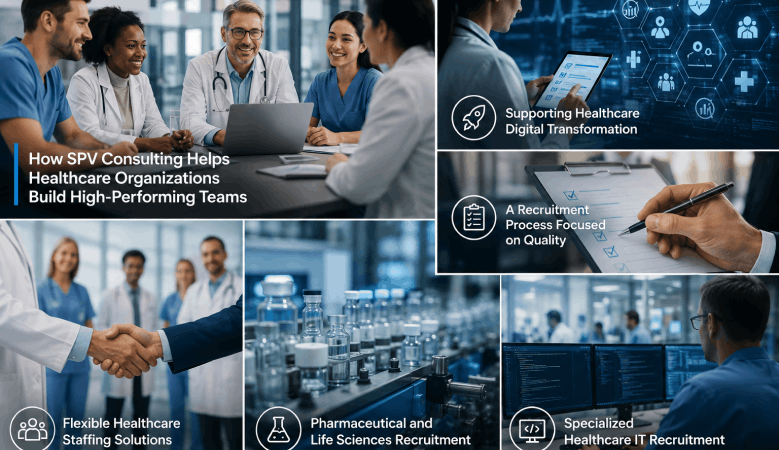
How SPV Consulting Helps Healthcare Organizations Build High-Performing Teams
Healthcare recruitment is becoming increasingly specialized as organizations adopt new technologies, navigate stricter compliance requirements, and compete for a limited pool of experienced professionals. While internal HR teams play an essential role, many organizations partner with specialized recruitment firms to access niche expertise, accelerate hiring, and secure high-quality candidates for difficult-to-fill positions.
SPV Consulting helps hospitals, healthcare technology companies, pharmaceutical organizations, health insurers, and enterprise healthcare providers build high-performing teams through specialized healthcare recruitment solutions. Our recruiters understand the unique hiring challenges across both clinical technology and enterprise IT environments, enabling us to identify professionals who possess the right technical expertise, industry experience, and cultural fit.
Specialized Healthcare IT Recruitment
Healthcare organizations rely heavily on technology to improve patient care, strengthen security, and streamline operations. Recruiting professionals with both healthcare knowledge and technical expertise can be challenging, particularly in competitive markets where experienced candidates have multiple opportunities.
SPV Consulting specializes in recruiting professionals across a wide range of healthcare IT disciplines, helping organizations build teams that support digital transformation and operational excellence.
We recruit for roles including:
- Epic Consultants
- Oracle Health (Cerner) Specialists
- Healthcare Cybersecurity Engineers
- Health Informatics Specialists
- Clinical Data Analysts
- Healthcare Project Managers
- Cloud Engineers
- Data Engineers
- AI & Machine Learning Engineers
- HL7/FHIR Integration Specialists
Pharmaceutical and Life Sciences Recruitment
Pharmaceutical organizations operate in highly regulated environments where technology professionals must understand both enterprise systems and compliance requirements. Recruiting experienced professionals with expertise in GxP environments, FDA regulations, Computer System Validation (CSV), and pharmaceutical manufacturing systems requires specialized industry knowledge.
SPV Consulting supports pharmaceutical companies by sourcing professionals who understand regulated environments and enterprise technologies critical to modern pharmaceutical operations.
Our pharmaceutical recruitment expertise includes:
- SAP Consultants
- Computer System Validation (CSV) Specialists
- Quality Management System (QMS) Professionals
- Manufacturing Execution System (MES) Specialists
- Laboratory Information Management System (LIMS) Experts
- Regulatory Affairs Technology Professionals
- IT Infrastructure & Security Specialists
- Digital Transformation Consultants
Flexible Healthcare Staffing Solutions
Every healthcare organization has different hiring needs. Some require contract professionals for short-term projects, while others need permanent employees or executive leadership for long-term growth. SPV Consulting offers flexible engagement models that align with your workforce requirements and project timelines.
Whether you’re supporting an EHR implementation, expanding your cybersecurity team, migrating to SAP S/4HANA, or building a digital health platform, our recruitment specialists can quickly identify professionals with the right skills and industry experience.
Our staffing solutions include:
- Contract Staffing
- Contract-to-Hire
- Permanent Recruitment
- Executive Search
- Project-Based Staffing
- Team Augmentation
A Recruitment Process Focused on Quality
Finding qualified candidates is only one part of successful healthcare recruitment. Every candidate should be carefully evaluated for technical capability, industry knowledge, certifications, and long-term organizational fit.
SPV Consulting follows a structured recruitment process designed to reduce hiring risks while improving placement quality. We work closely with hiring managers to understand business objectives, technical requirements, and organizational culture before presenting candidates.
Our recruitment approach includes:
- Requirement discovery
- Technical screening
- Healthcare domain assessment
- Compliance and credential verification
- Reference checks
- Candidate interview coordination
- Offer management
- Post-placement support
Supporting Healthcare Digital Transformation
As healthcare organizations continue investing in AI, cloud computing, cybersecurity, interoperability, and enterprise ERP platforms, the demand for specialized technology professionals will continue to grow. SPV Consulting helps organizations stay ahead by connecting them with professionals capable of leading complex digital transformation initiatives while maintaining compliance and operational excellence.
Whether you’re modernizing clinical systems, implementing enterprise applications, or strengthening your healthcare technology workforce, SPV Consulting provides the expertise and talent needed to support long-term success.
Conclusion
Developing an effective healthcare recruitment strategy is no longer just about filling vacancies, it’s about building a workforce capable of delivering exceptional patient care, driving innovation, and supporting long-term organizational growth. The most successful healthcare recruitment strategies combine employer branding, technology, workforce planning, and specialized expertise to help organizations attract and retain exceptional professionals. As recruitment strategies for healthcare organizations continue to evolve, employers that invest in proactive hiring practices will remain better positioned to compete for top talent.
As competition for skilled healthcare professionals continues to increase, organizations that adopt proactive, data-driven recruitment practices will be better positioned to overcome workforce shortages and achieve sustainable growth.
At SPV Consulting, we combine deep expertise in healthcare recruitment, healthcare IT staffing, SAP consulting, and pharmaceutical talent acquisition to help organizations hire the right professionals faster. Whether you’re expanding your clinical technology team, supporting a digital transformation initiative, or searching for highly specialized healthcare IT talent, our recruitment experts are ready to help you build a workforce prepared for the future.
min read
TOPICS
- What Is a Healthcare Recruitment Strategy?
- Why Healthcare Recruitment Is More Challenging Than Ever in 2027
- Why Modern Healthcare Recruitment Strategies Matter
- 20 Proven Healthcare Recruitment Strategies to Hire Top Talent in 2027
- How SPV Consulting Helps Healthcare Organizations Build High-Performing Teams
- Conclusion
Frequently Asked Questions
What is a healthcare recruitment strategy?
A healthcare recruitment strategy is a structured plan that healthcare organizations use to attract, hire, and retain qualified professionals. It includes workforce planning, employer branding, candidate sourcing, interviewing, onboarding, and retention initiatives designed to build a sustainable workforce while supporting organizational goals and patient care.
Why are healthcare recruitment strategies important?
Healthcare recruitment strategies help organizations reduce hiring delays, improve candidate quality, lower recruitment costs, and create sustainable talent pipelines that support long-term growth.
A well-planned strategy also strengthens employer branding, improves employee retention, and ensures healthcare organizations have the talent needed to deliver high-quality patient care.
What are the biggest healthcare recruitment challenges in 2027?
Some of the biggest healthcare recruitment challenges include workforce shortages, increasing competition for skilled professionals, employee burnout, regulatory compliance, rapid digital transformation, and the growing demand for specialized healthcare IT talent. Organizations must also adapt to evolving candidate expectations regarding flexibility, career development, and workplace culture.
How can healthcare organizations attract top talent?
Healthcare organizations can attract top talent by building a strong employer brand, offering competitive compensation and benefits, creating positive candidate experiences, investing in employee development, leveraging employee referrals, and using technology to streamline recruitment. Showcasing career growth opportunities and organizational culture also helps attract highly qualified candidates.
What role does technology play in healthcare recruitment?
Technology helps automate repetitive recruitment tasks such as resume screening, interview scheduling, applicant tracking, and candidate communication. Artificial intelligence and recruitment analytics also help identify suitable candidates faster, improve hiring decisions, and enhance workforce planning without replacing human judgment.
Why is healthcare IT recruitment different from general IT recruitment?
Healthcare IT recruitment requires professionals who understand both technology and the healthcare environment. Recruiters must evaluate experience with platforms such as Epic, Oracle Health, SAP, HL7, FHIR, healthcare cybersecurity, compliance standards like HIPAA, and clinical workflows—making healthcare IT recruitment significantly more specialized than general IT staffing.
When should healthcare organizations partner with a specialized recruitment firm?
Organizations should consider partnering with a specialized healthcare recruitment firm when hiring for difficult-to-fill positions, expanding rapidly, implementing digital transformation initiatives, or recruiting highly specialized professionals such as healthcare IT consultants, SAP experts, cybersecurity engineers, or executive leadership. Specialized recruiters provide access to niche talent pools and industry expertise that can significantly reduce hiring time.
How can healthcare organizations improve employee retention after hiring?
Retention begins during the recruitment process. Organizations can improve retention by hiring candidates who align with their culture, providing structured onboarding, offering career development opportunities, supporting employee well-being, recognizing achievements, and maintaining open communication. Competitive compensation and flexible work options where possible also contribute to long-term employee satisfaction.
What healthcare roles are currently most in demand?
Demand remains high for registered nurses, physicians, allied health professionals, healthcare administrators, and pharmacists. On the technology side, organizations are actively hiring Epic Consultants, Healthcare Cybersecurity Engineers, Health Informatics Specialists, Clinical Data Analysts, SAP Consultants, AI Engineers, Cloud Architects, and HL7/FHIR Integration Specialists.
How does SPV Consulting support healthcare recruitment?
SPV Consulting provides specialized healthcare recruitment solutions for hospitals, pharmaceutical companies, healthcare technology providers, and enterprise healthcare organizations. Our expertise spans healthcare IT staffing, SAP consulting, pharmaceutical recruitment, executive search, contract staffing, and direct hire services. By combining industry knowledge with rigorous candidate screening and access to specialized talent networks, we help organizations hire skilled professionals faster and build high-performing teams for long-term success.
What are the 5 C's of recruitment?
The 5 C’s of recruitment provide a simple framework for building an effective hiring process:
- Clarity – Clearly define the job role, responsibilities, and required qualifications.
- Communication – Maintain transparent and timely communication with candidates throughout the recruitment process.
- Candidate Experience – Create a smooth, engaging, and respectful hiring journey to leave a positive impression.
- Culture Fit – Assess whether candidates align with your organization’s values, mission, and work environment.
- Commitment – Focus on long-term success by hiring candidates who are committed to growth and retention within the organization.
Applying these principles helps healthcare organizations improve hiring quality, reduce turnover, and build stronger teams.
What is the healthcare recruitment process?
The healthcare recruitment process is the foundation of an effective healthcare recruitment strategy and provides a structured approach for attracting, assessing, hiring, and onboarding qualified healthcare professionals.
Because healthcare roles often involve strict licensing, certifications, and regulatory requirements, employers must also verify credentials, conduct background checks, and ensure compliance with standards such as HIPAA before extending an offer. A well-defined recruitment process helps healthcare organizations hire qualified professionals efficiently while maintaining high standards of patient care and compliance.
What are the 7 stages of recruitment?
Although recruitment processes vary across organizations, the seven common stages of recruitment are:
- Identify hiring needs and define the job requirements.
- Create and advertise the job opening across appropriate recruitment channels.
- Source and attract candidates through job boards, referrals, recruitment agencies, and professional networks.
- Screen applications and shortlist qualified candidates.
- Conduct interviews and assessments to evaluate technical skills, experience, and cultural fit.
- Perform background checks, credential verification, and reference checks, followed by extending a job offer.
- Onboard the new employee with orientation, training, and support to ensure a successful transition into the organization.
Following a structured recruitment process helps healthcare organizations improve hiring efficiency, reduce time-to-fill, and increase long-term employee retention.